
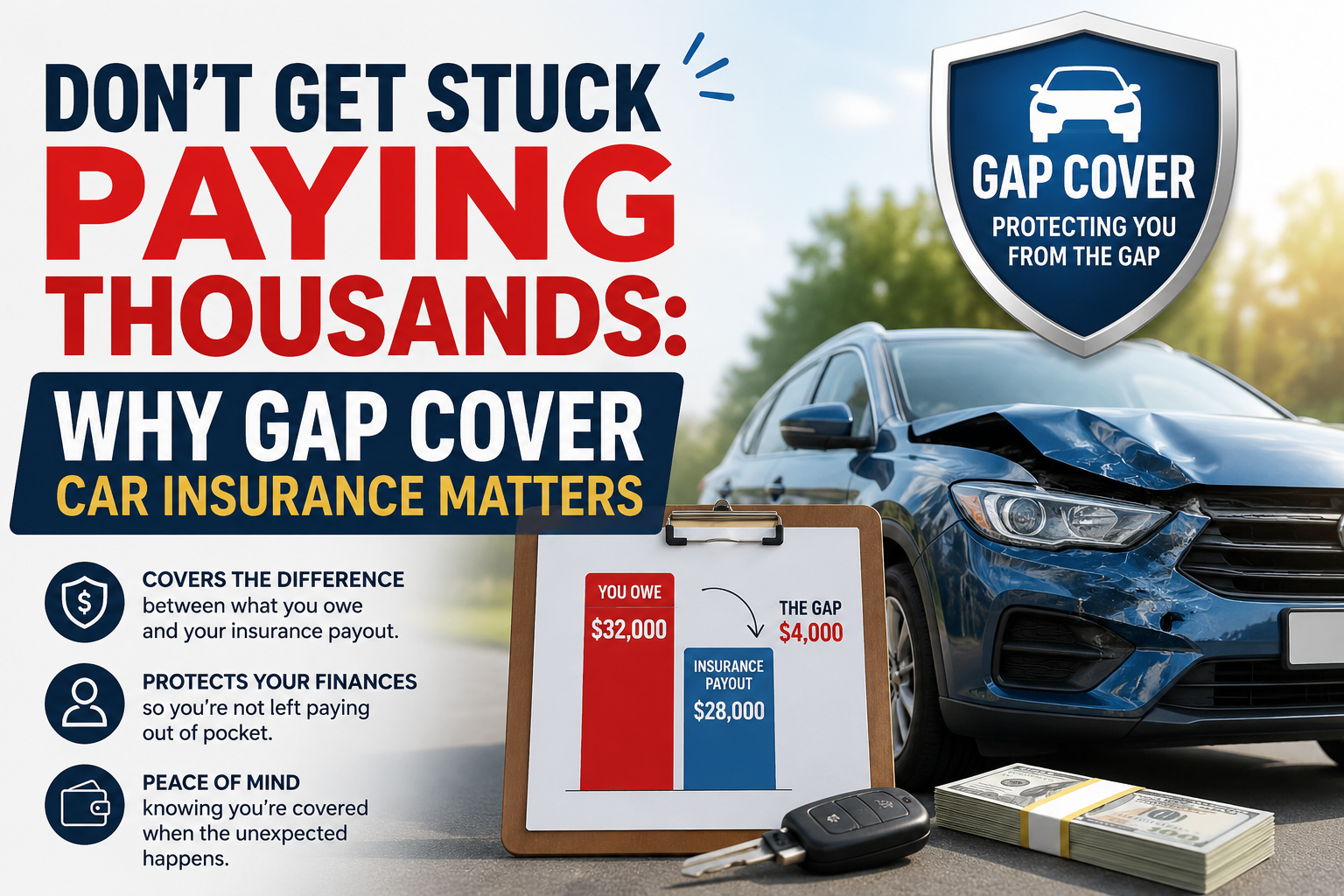
While standard auto insurance covers the current market value of your car after a total loss, it may not cover what you still owe on your finance agreement. That's where gap cover car insurance can make a significant difference.
What Is Gap Cover Car Insurance?
Gap cover car insurance is an optional insurance policy designed to cover the "gap" between your car's actual cash value and the remaining balance on your loan or lease if your vehicle is declared a total loss due to theft, accident, or certain covered events.
For example, imagine you purchase a new vehicle for $35,000. After one year, its market value drops to $28,000, but you still owe $32,000 on your loan. If your insurer pays only the vehicle's current value of $28,000, you're left responsible for the remaining $4,000. Gap cover insurance helps pay that difference.
Why Vehicle Depreciation Matters
New vehicles can depreciate rapidly, especially during the first few years of ownership. Even with comprehensive auto insurance, claim settlements are typically based on the car's current market value rather than its original purchase price.
This means drivers who financed their vehicles with a low down payment or longer loan terms may owe more than their car is worth. Gap cover helps protect against this financial shortfall.
Who Should Consider Gap Cover?
Gap cover may be a smart choice if you:
-
Purchased a new vehicle with financing.
-
Made a small down payment.
-
Have a loan term of five years or longer.
-
Lease your vehicle.
-
Drive a vehicle that depreciates quickly.
-
Want added financial protection in the event of a total loss.
While not every driver needs gap insurance, it can provide valuable peace of mind for those with outstanding vehicle loans or leases.
What Does Gap Cover Typically Pay For?
Although coverage varies by insurer, gap cover commonly helps pay:
-
The remaining balance on your vehicle loan or lease after your primary insurer's payout.
-
The difference between your vehicle's insured value and the amount still owed.
-
Certain policy-related fees, depending on the provider.
Always review your policy carefully to understand what is and isn't included.
What Isn't Usually Covered?
Gap cover generally does not pay for:
-
Vehicle repairs after minor accidents.
-
Missed loan payments.
-
Extended warranties or maintenance plans.
-
Negative equity carried over from a previous vehicle loan (unless specifically included).
-
Deductibles, unless your policy states otherwise.
Reading the policy terms before purchasing coverage is essential.
Benefits of Gap Cover Car Insurance
Choosing gap cover offers several potential advantages:
-
Financial protection: Reduces the risk of paying out of pocket after a total loss.
-
Peace of mind: Helps eliminate unexpected financial burdens.
-
Supports financed vehicles: Particularly beneficial during the early years of a loan.
-
Affordable coverage: Premiums are often relatively low compared to the potential financial benefit.
Is Gap Cover Worth It?
The answer depends on your financial situation. If you own your vehicle outright or have significant equity in it, gap cover may not be necessary. However, if you recently financed a new vehicle or owe more than it's currently worth, gap insurance can provide valuable protection against unexpected costs.
Before purchasing, compare policy features, exclusions, claim limits, and pricing from different providers to ensure you're getting coverage that fits your needs.
Gap cover car insurance is designed to protect drivers from one of the most overlooked financial risks of vehicle ownership: depreciation. While standard auto insurance helps replace your vehicle's current value, gap cover helps protect you from remaining loan balances that could otherwise become an unexpected expense.
Understanding how gap cover works allows you to make a more informed decision and choose the level of protection that's right for your circumstances.