
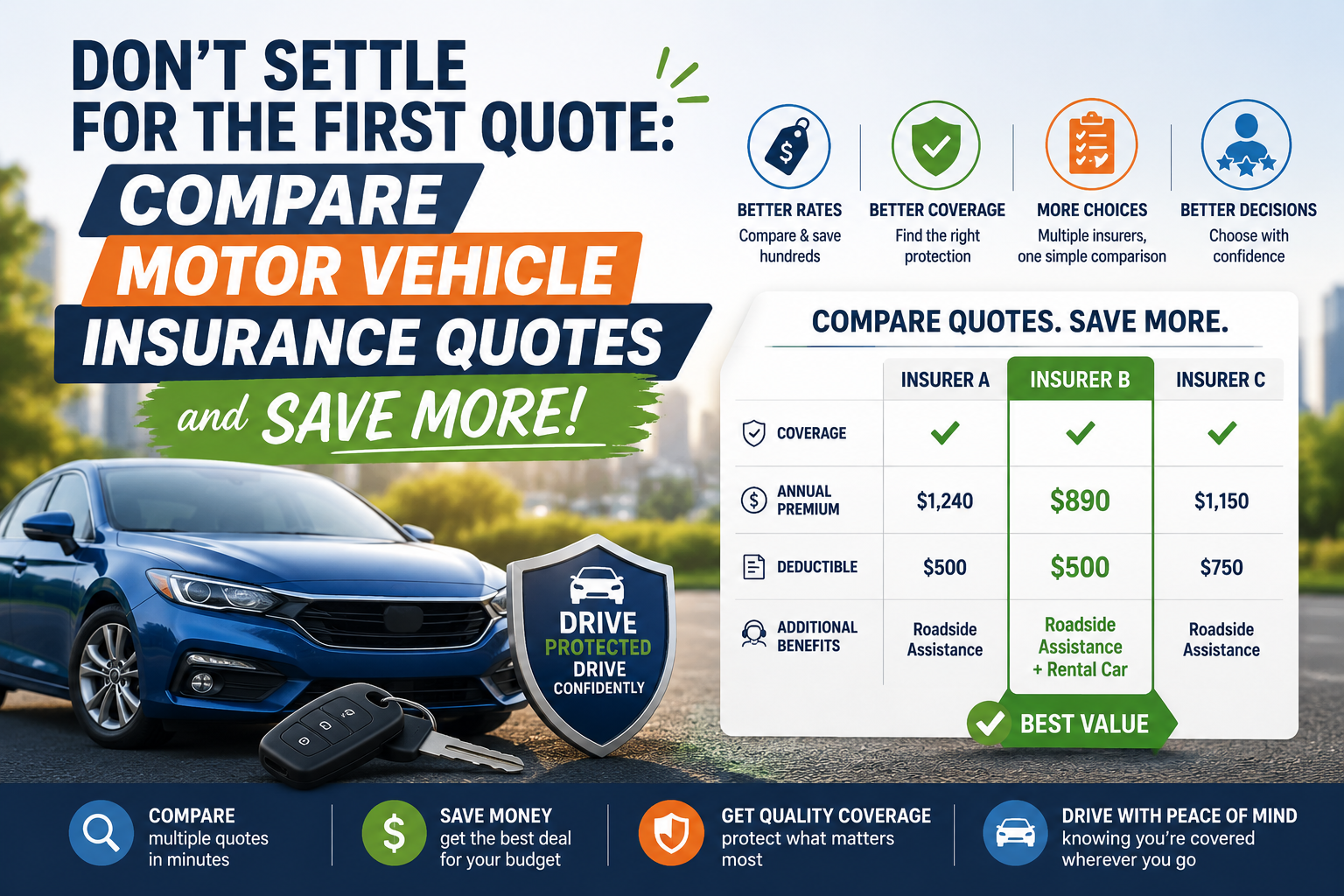
The truth is, the cheapest policy isn't always the best value. That's why comparing motor vehicle insurance quotes is one of the smartest steps you can take before purchasing or renewing your coverage.
By taking the time to compare quotes, you can find a policy that fits your budget while providing the protection you need on the road.
What Is a Motor Vehicle Insurance Quotes Comparison?
A motor vehicle insurance quotes comparison is the process of gathering and evaluating insurance offers from multiple providers. Rather than accepting the first quote you receive, comparing several options allows you to assess differences in pricing, coverage, policy features, deductibles, and customer benefits.
Each insurer calculates premiums differently, so rates for the same driver and vehicle can vary significantly.
Why Comparing Insurance Quotes Matters
Insurance premiums are based on many factors, including your driving history, vehicle type, location, annual mileage, and chosen level of coverage. Because every insurance company uses its own pricing model, comparing quotes can help you uncover better value.
Some of the key benefits include:
-
Finding more competitive premiums.
-
Identifying policies with broader coverage.
-
Discovering valuable extras such as roadside assistance or rental car benefits.
-
Avoiding paying for unnecessary coverage.
-
Making informed decisions with confidence.
What Should You Compare?
Price is important, but it shouldn't be the only consideration. When reviewing motor vehicle insurance quotes, pay attention to:
Coverage Options
Check whether the policy includes comprehensive, collision, third-party liability, theft, fire, natural disaster protection, or uninsured motorist coverage.
Deductibles
A lower premium may come with a higher deductible, meaning you'll pay more out of pocket if you make a claim.
Policy Limits
Review the maximum amount the insurer will pay for different types of claims.
Exclusions
Read the fine print to understand situations where coverage may not apply.
Discounts
Many insurers offer discounts for safe drivers, bundling policies, anti-theft devices, low annual mileage, or completing defensive driving courses.
Claims Process
Look for insurers known for responsive customer service and efficient claims handling.
Tips for Getting Accurate Insurance Quotes
To receive accurate and comparable quotes:
-
Provide the same information to each insurer.
-
Use identical coverage limits when comparing.
-
Be honest about your driving history.
-
Include all regular drivers of the vehicle.
-
Review quotes annually before renewing your policy.
Even small differences in coverage can affect the quoted premium, so consistency is essential.
Common Mistakes to Avoid
Many drivers make the mistake of choosing a policy based solely on price. While affordability matters, insufficient coverage can become costly after an accident.
Avoid these common pitfalls:
-
Ignoring policy exclusions.
-
Choosing the lowest premium without reviewing benefits.
-
Forgetting to compare deductibles.
-
Overlooking available discounts.
-
Automatically renewing without shopping around.
How Often Should You Compare Quotes?
Insurance rates change over time due to market conditions, insurer pricing updates, and changes in your personal circumstances. It's a good idea to compare motor vehicle insurance quotes:
-
Before renewing your current policy.
-
After purchasing a new vehicle.
-
Following a change of address.
-
If your driving record improves.
-
When adding or removing drivers from your policy.
Regular comparisons can help ensure you're still receiving competitive pricing.
Comparing motor vehicle insurance quotes isn't just about finding the lowest premium—it's about finding the best overall value. By reviewing coverage, deductibles, policy features, and insurer reputation alongside price, you can choose a policy that provides both financial protection and peace of mind.
Taking a few extra minutes to compare quotes today could save you money while ensuring you have the right coverage when you need it most.